
Boulder Frozen Pipes
Sub-zero winter storms cause severe pressure ruptures when uninsulated supply lines freeze inside exterior wall cavities. Our certified restoration technicians isolate supplies immediately, applying controlled thermal thawing and rapid water extraction to halt structural damage. We dry framing, subflooring, and insulation thoroughly to return your property to safe conditions.
When it's safe to return, call (303) 555-0131 and we'll schedule an assessment.
Front Range Freeze Recovery Specialists
The area has 46,551 housing units on record in the Census ACS 5-year estimates.
The median owner-occupied home locally was built in 1977 (Census ACS 5-year).
About 18% of housing units locally (8,504 of 46,551) were built before 1960, the era of galvanized steel supply lines and cast iron drains.
About 17% of housing units in the community (7,699 of 46,551) were built since 2000, so a substantial share of the local stock is still on its original systems.
Rapid sub-zero cold snaps along the Front Range frequently freeze uninsulated supply lines run through exterior wall cantilevers and unheated crawl spaces.
Our complete emergency water extraction and structural drying services stabilize vulnerable framing before hidden moisture creates lasting damage.
Supply lines frozen inside uninsulated walls require safe thawing procedures to avoid splitting copper lines after shutting off the main supply.
During seasonal runoff, heavy precipitation rapidly raises local groundwater levels, creating hydrostatic pressure that forces water up through concrete slabs and foundation joints.
Step-by-Step Freeze Response And Extraction
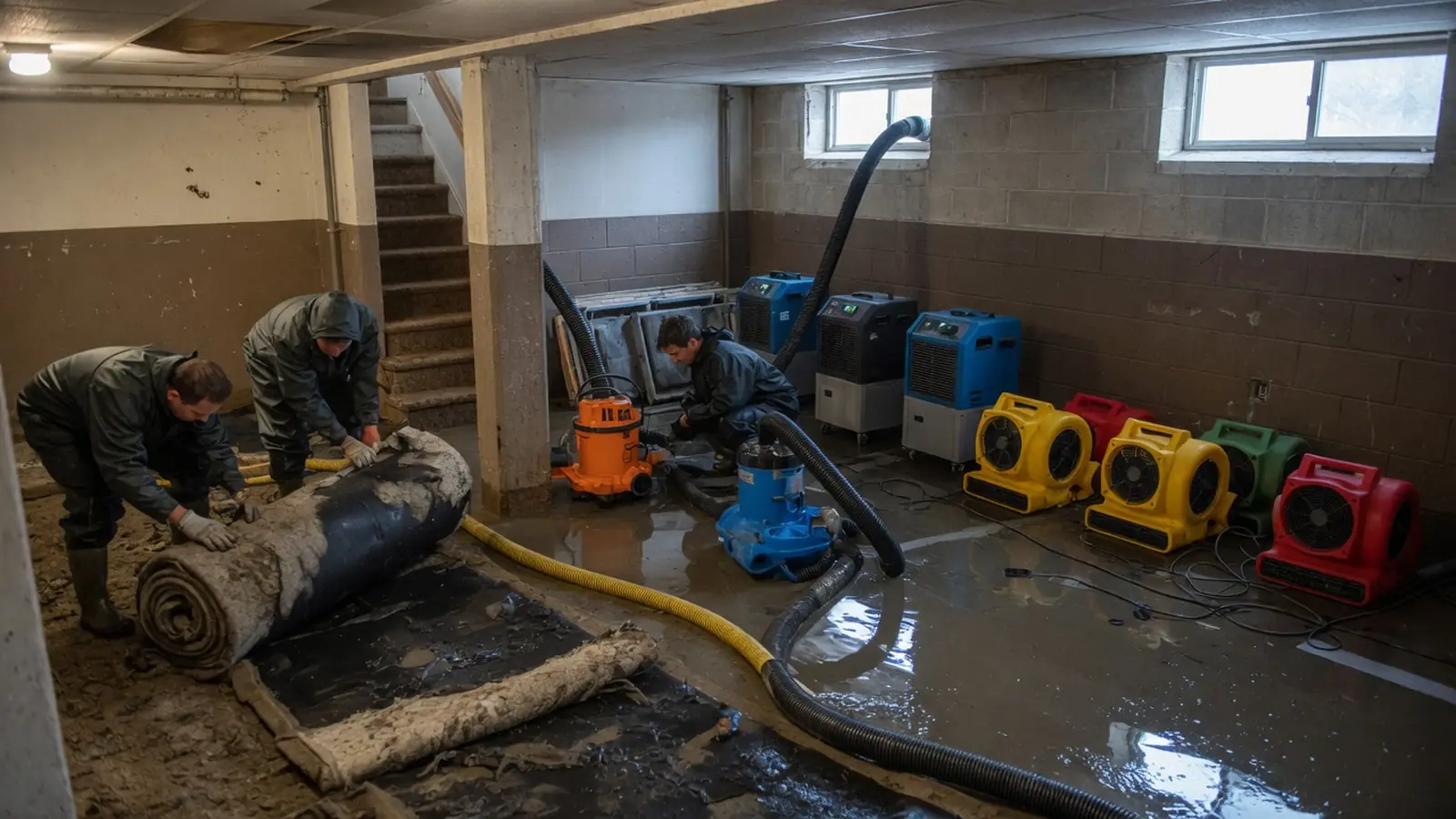
When an unexpected freeze splits water lines, immediate containment is crucial to stop catastrophic flooding. If escaping water migrates downstairs, we manage finished basement flooding cleanup to protect subfloors and structural footings.
- Line Assessment & Rapid Triage. Peak winter cold snaps in Colorado drive hundreds of pipe freeze failures, necessitating rapid line assessments to avoid massive uncontrolled flooding.
- Thermal Thawing & Pressure Isolation. Technicians isolate the main water shutoff before applying controlled thermal thawing to prevent high-pressure structural ruptures inside exterior wall cavities.
- Bulk Extraction & Cavity Inspection. Crews pump standing water using commercial extraction units and deploy infrared inspection tools to verify moisture migration across concealed framing bays.
- Structural Dehumidification & Sanitization. High-velocity air movers and low-grain refrigerant dehumidifiers run continuously under controlled conditions until timber moisture content reaches baseline.
Targeted Mitigation Without Excess Demolition
A pattern echoed in public discussions is that homeowners question aggressive containment and high demolition quotes when addressing small, localized mold patches caused by minor plumbing leaks. Whenever trapped dampness lingers behind wallboard, learn how our certified mold remediation protocols eliminate microbial growth without unnecessary demolition. We use precision moisture meters and thermal imaging to document real drying goals, ensuring repairs stay focused strictly on affected materials.
Thermal Pipe Thawing
Safe, low-heat thermal thawing techniques restore flow without torching pipes or cracking delicate joints. We relieve line pressure before warming concealed runs to preserve exterior wall structures.
Emergency Water Extraction
Industrial extraction pumps pull hundreds of gallons of standing water from flooring, crawl spaces, and baseboards in minutes. Prompt extraction prevents warping and stops secondary saturation in surrounding assemblies.
Structural Drying & Sanitization
Commercial dehumidification systems pull moisture from deep within framing lumber, subflooring, and wall cavities. Antimicrobial treatments ensure building components dry completely without fungal development.
Our Approach To Structural Water Remediation
We focus on measured moisture removal, verifying structural dryness using calibrated sensing equipment rather than guesswork. Every project receives dedicated technician attention, detailed moisture logging, and complete extraction protocols.
- 10Zip Codes Served
- 6Service Areas
- 3Services Offered
Real feedback from local property owners who faced sudden winter pipe freezes and relied on our crew for rapid extraction, safe thermal thawing, and complete structural drying.
“We had a final buyer walkthrough scheduled in two days when an exterior wall pipe froze solid during an overnight freeze. The crew arrived within hours, set up thermal drying equipment, and dried the ceiling cavity completely before the inspector signed off. Their swift turnaround saved our closing date without a single issue.”
Marcus V.
“While thawing the primary supply line, the crew identified a secondary pinhole split behind our built-in pantry that was quietly dripping onto the subfloor. Instead of panicking or stalling, they immediately contained the moisture, patched the line, and adjusted the air movers on the spot. Everything was resolved cleanly without unnecessary wall demolition.”
Elena R.
“An earlier company had pulled out some baseboards after a burst line but left wet fiberglass batts festering inside the unheated crawl space. This company stepped in, stripped out the contaminated batting, and completely sanitized the joists using commercial dehumidifiers. The difference in their thoroughness and moisture testing was night and day.”
Julian K.
“Every detail of the thermal thawing and extraction process was itemized before work started, with zero surprise fees on the final invoice. The team explained exactly what equipment was running and billed precisely what their initial estimate quoted. That level of transparency made a stressful emergency much easier to manage.”
Claire S.
Frequently Asked Questions
Does homeowners insurance cover water restoration from a frozen pipe burst if the heating system remained operational?
Most policies cover sudden water damage if heat was maintained, though claims require documenting prompt mitigation and operational thermostat settings. Adjusters generally look for evidence of continuous heating and rapid professional extraction to mitigate secondary damages.
How quickly must water extraction begin after an indoor pipe freeze rupture?
Extraction must begin within 24 to 48 hours of line rupture to prevent microbial infestation and severe delamination of structural floor framing. Prompt bulk removal stabilizes the indoor climate and prevents moisture from traveling into adjacent living areas.
What safe thawing procedures prevent split copper pipes in exterior wall cavities?
Controlled low-heat air circulation with an isolated supply valve prevents pressure spikes that burst weakened copper joints inside exterior walls. Technicians open interior faucets to relieve ice block pressure while monitoring cavity temperatures with infrared sensors.
How do technicians detect trapped moisture behind finished drywall after a freeze?
Technicians combine non-penetrating RF meters and infrared thermal imaging cameras to map hidden moisture pockets without invasive wall cuts. These tools pinpoint exact water boundaries across insulated framing, ensuring drying equipment targets only saturated materials.
What factors influence the total drying time for burst pipe water damage?
Structural drying typically requires three to five days depending on cavity insulation density, ambient humidity levels, and wood saturation depth. Daily moisture readings track moisture release until wood equilibrium moisture content matches dry regional standards.