
Boulder Mold Remediation
Unresolved structural water intrusion creates continuous moisture buildup and pooling water that accelerate hazardous indoor mold development. Our certified technicians isolate contaminated spaces, extract moisture, and sanitize building materials to protect your property. We restore clean indoor air through targeted containment and rapid drying protocols.
Call (303) 555-0131 once the source is off. If you can't find the shutoff, we'll walk you to it on the phone.
Trusted Local Remediation Experts
Our remediation specialists bring years of practical trade experience diagnosing microbial contamination across Front Range residential structures.
The median owner-occupied home across this community was built in 1977 (Census ACS 5-year).
About 71% of housing units in our service area (32,921 of 46,551) were built before 1980, the period when asbestos-containing materials and lead paint were still in use.
A pattern echoed in public discussions is that unresolved structural water intrusion creates continuous moisture buildup and pooling water that accelerate hazardous indoor mold development.
A frequent concern raised in regional property forums is that basement flooding triggered by Colorado snowmelt and pipe failures demands immediate water extraction before elevated indoor humidity prompts rapid mold growth.
When severe moisture threatens building framing, see our comprehensive water damage restoration services to stabilize your property before microbial spread accelerates.
Every project follows strict containment standards to guarantee that living areas remain completely protected throughout the remediation process.
How We Safely Eliminate Indoor Mold
Local homeowners often describe how homeowners question aggressive containment and high demolition quotes when addressing small, localized mold patches caused by minor plumbing leaks. If your property suffers sudden inundation, explore our rapid response for basement flooding to eliminate moisture reservoirs before spores take hold.
- Moisture Mapping & Thermal Inspection. Our technicians scan drywall, baseboards, and subfloors with calibrated moisture meters and infrared cameras to locate hidden moisture pockets. Our semi-arid foothills climate often masks indoor moisture issues, allowing condensation behind insulated framing to foster hidden mold colonies before odors appear.
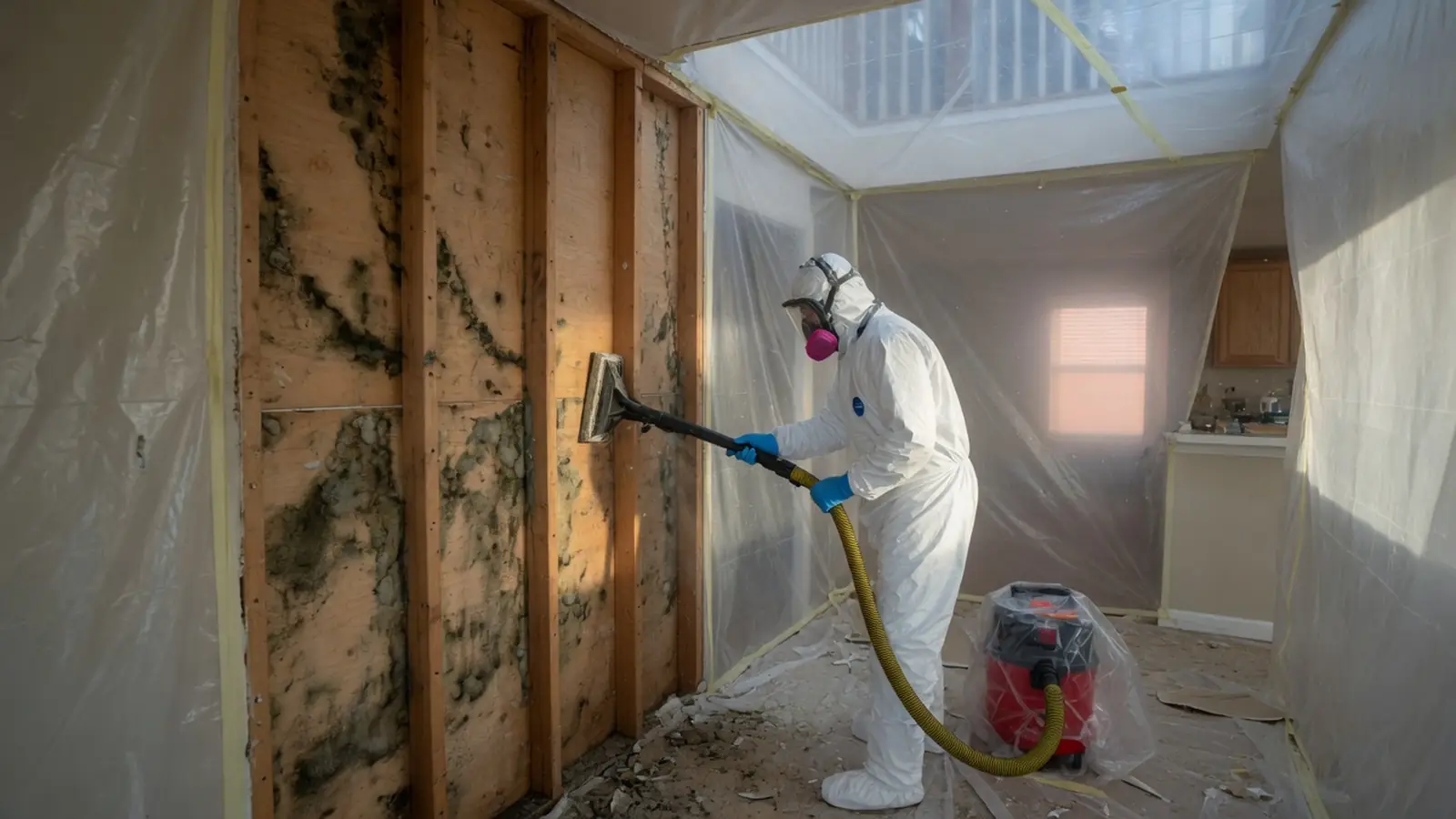
- Containment & Negative Air Scrubbing. Remediation crews establish negative air pressure containment chambers with HEPA air scrubbers before demolition to stop airborne spore migration. Heavy-duty poly sheeting seals off doorways and HVAC vents to keep living quarters completely isolated.
- Targeted Demolition & Antimicrobial Treatment. Infested porous materials like contaminated drywall and insulation are carefully bagged in sealed containers for safe removal. Structural wall studs and framing members receive mechanical wire brushing followed by EPA-registered antimicrobial wash solutions.
- HEPA Vacuuming & Structural Drying. Technicians perform detailed HEPA vacuuming across all exposed structural framing before deploying commercial air movers and desiccant dehumidifiers. We continuously monitor ambient relative humidity until structural framing meets strict dry-standard thresholds.
Our Commitment To Clear Protocols
As homeowners often describe in local forums, property owners struggle to identify transparent remediation protocols and avoid inflated quotes driven by high-pressure tactics. Whenever cold weather ruptures plumbing lines, learn more about emergency frozen pipe cleanup to halt hidden water migration behind finished drywall. Our crew provides upfront scope evaluations, clear photo documentation, and itemized billing based strictly on industry containment standards.
Attic & Crawl Space Mold Removal
Roof leaks and unconditioned crawl spaces frequently trap condensation against roof sheathing and floor joists. The crew installs specialized negative air ventilation, removes contaminated insulation, and seals wood framing with mold-resistant coatings. We target root moisture sources to ensure colonies never return.
Drywall & Framing Decontamination
Spraying household bleach on porous drywall is ineffective for eliminating an established indoor mold infestation because liquid cannot reach embedded fungal hyphae. Our technicians remove compromised drywall, sand structural studs, and treat exposed framing with deep-penetrating antimicrobial agents. Clean physical removal protects indoor air quality permanently.
HVAC & Air Duct Sanitization
Spore circulation through forced-air heating and cooling networks can contaminate multiple rooms quickly. The team seals supply vents, deploys negative pressure vacuums, and applies botanical antimicrobials throughout trunk lines. Your ductwork is returned to clean, allergen-free operation.
Dedicated To Clear Standards
We approach every microbial remediation project with transparent inspection findings, proper engineering controls, and strict containment. Homeowners receive factual evaluations that prioritize safety without unnecessary demolition.
- 11Zip Codes Served
- 6Service Areas
- 3Services Offered
Read honest feedback from local homeowners who trusted our crew to resolve indoor moisture challenges and safely decontaminate their living spaces.
“Instead of tearing out all the subflooring in our hallway, the crew explained how applying a penetrating antimicrobial sealer over cleaned joists would give permanent durability. That honest material choice saved us thousands compared to a full rebuild. Our indoor air test came back completely clear a week later.”
David M.
“We received an initial quote from a cut-rate contractor who wanted to spray disinfectant without setting up any containment barriers. This company walked us through why negative air scrubbers were essential to protect our bedrooms from drifting spores. Choosing them gave our family total peace of mind throughout demolition.”
Rachel S.
“Given that our 1960s ranch had original drywall textures, the team made sure proper asbestos testing was completed before disturbing any surfaces. They coordinated the required local documentation seamlessly and kept our project on track. Their attention to safety regulations was exceptional from start to finish.”
Arthur P.
“A plumbing supply line ruptured behind our laundry wall on a Saturday evening, soaking the studs. Their technician answered our late call right away and arrived with containment equipment before microbial growth could spread. That quick weekend turnaround prevented what could have been massive structural damage.”
Clara W.
Frequently Asked Questions
Why is spraying household bleach on porous drywall ineffective for eliminating mold?
Bleach cannot soak into porous drywall to destroy root structures, leaving deep fungal growth alive while surface water fuels rapid regrowth. Chlorine bleach is formulated with high water content that evaporates slowly on gypsum boards, often providing added moisture that encourages latent spores to germinate. Professional remediation requires physical containment, mechanical removal of saturated drywall, and EPA-registered antimicrobial wash treatments on underlying framing.
How do you prevent mold spores from spreading to clean rooms during removal?
Remediation crews establish negative air pressure containment chambers with HEPA air scrubbers before demolition to stop airborne spore migration. Technicians seal doorways, corridors, and HVAC return registers using 6-mil poly barriers and magnetic zippered doorways. Continuously venting scrubbed air outside creates lower pressure inside the work zone, ensuring air only flows inward when doors open.
Is professional remediation necessary for small mold patches from plumbing leaks?
Homeowners question aggressive containment and high demolition quotes when addressing small, localized mold patches caused by minor plumbing leaks. For small surface areas under ten square feet caused by minor leaks, full containment demolition may be unnecessary if underlying drywall and framing remain completely dry. However, if moisture has migrated deep behind baseboards or inside wall cavities, professional moisture mapping is recommended to confirm no hidden colonies exist.
How do older housing materials impact mold removal protocols?
About 71% of housing units locally (32,921 of 46,551) were built before 1980, when asbestos and lead paint required special containment rules. When older drywall, acoustic ceiling textures, or vinyl flooring must be removed during remediation, strict lead-safe and asbestos protocols apply. Our crew ensures proper pre-demolition testing is observed so that hazardous fibers are never disturbed or aerosolized into your living spaces.
How can property owners avoid overpaying for mold cleanup?
Property owners struggle to identify transparent remediation protocols and avoid inflated quotes driven by high-pressure tactics. Always request a detailed, itemized protocol that separates inspection, air scrubbing, physical removal, and antimicrobial treatment. A reputable tradesperson provides photographic documentation and moisture meter readings to justify every proposed step rather than relying on scare tactics.